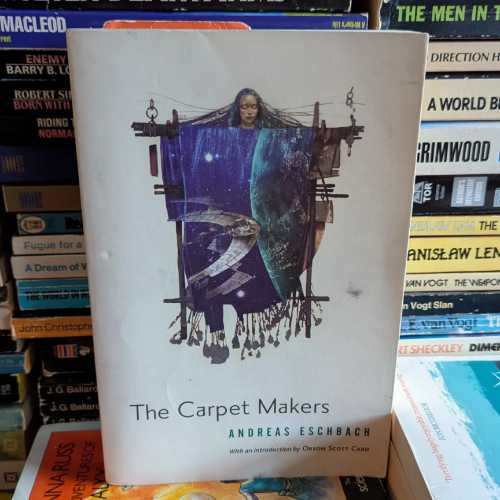
The Carpet Makers
★★★★★
Eighty thousand years ago a provincial galaxy was lost to the empire and all records mysteriously destroyed. After a rebellion overthrows the God-Emperor, the galaxy is rediscovered, which reveals whole planets dedicated solely to the production of hair carpets — each one taking its maker a lifetime to weave from human hair.
Primitive, fallen, and hidebound by millennia of tradition, the worlds are decaying, allowing no innovation or deviation from doctrine. Each short chapter is a vignette that expands our understanding of the culture through the brutal stories of its inhabitants. Most are irredeemably tragic — wasted lives bound by ritualistic oaths, spent in service to the all-consuming carpet economy.
A bleak satirical nihilism pervades the novel, embracing the irony of finding meaning in meaningless rituals, titles, and wealth. There are no heroes to cheer for, no redemption to be had. Even the Potemkin rebels are revealed as puppets playing their role. The existential death of the God-Emperor echoes Nietzsche’s ‘God is dead’, laying bare the hollowness of post-religious existence.
Eschbach’s prose is accessible, but the book feels more like a fixup of short stories threaded by the mystery, rather than an engaging narrative. He eschews protagonists in service of the metaphor — each story stands alone with its vivid characters playing bit parts in subsequent stories, elegantly weaving the worldbuilding together like the eponymous carpets.
The hair carpet mystery drives this book, and the final reveal lives up to the anticipation. This is a well-regarded story that excels in its creative and detailed worldbuilding, and the compelling hook of its mystery, but for me the lack of protagonists and tension in the plot left me admiring but ultimately missing emotional connection.